Built toTransform
A structured body transformation system integrating resistance training, nutritional strategy, recovery management, and behavioral accountability into one cohesive framework.
Body Recomposition & Permanent Transformation
The Muscle Mastery Method is a structured body transformation system designed to help adults build muscle, reduce body fat, and maintain a lean, athletic physique long term.
The goal is not short-term weight loss. The goal is body recomposition and permanent lifestyle transformation.
- 01 Increasing lean muscle mass
- 02 Reducing body fat
- 03 Optimizing metabolic health
- 04 Creating sustainable habits
- 05 Maintaining results long term
Evidence-Based Principles
1. Muscle Is the Foundation of Metabolic Health
Lean muscle mass improves:
- Insulin sensitivity
- Resting metabolic rate
- Nutrient partitioning
- Functional strength and longevity
The method prioritizes muscle development first, rather than weight loss alone.
Source: American College of Sports Medicine Position Stand on Resistance Training
2. Body Recomposition Is Superior to Dieting
Traditional dieting focuses on reducing body weight. The Muscle Mastery Method focuses on:
- Building muscle while reducing fat
- Improving physique quality
- Preserving metabolic rate
Weight loss without muscle preservation often leads to metabolic slowdown, muscle loss, and rebound weight gain.
Source: Studies led by Brad Schoenfeld on resistance training with adequate protein
3. Training Must Be Progressive
Muscle growth requires progressive overload. The body must experience increasing stimulus over time.
- Increased load
- Increased repetitions
- Improved movement quality
- Increased training density
Without progression, muscle growth plateaus.
4. Nutrition Must Support Training
The method emphasizes structured but sustainable nutrition, not extreme restriction.
- Adequate protein intake
- Strategic calorie management
- Whole-food prioritization
- Flexible eating patterns
Source: Morton et al., 2018, British Journal of Sports Medicine. Protein intake of ~1.6–2.2 g/kg/day for optimal muscle growth
5. Recovery Drives Adaptation
Muscle growth occurs during recovery, not during the workout itself. The system incorporates:
- Sleep optimization
- Fatigue management
- Deload weeks
- Stress management
These allow the body to adapt to training stress without burnout.
Five Pillars of The Method
Training Architecture
Hypertrophy-focused resistance training with progressive overload
Nutrition Strategy
Structured principles over rigid dieting: protein priority, calorie control
Recovery & Stress
Sleep, deloads, inflammation management, and intensity cycling
Accountability
Weekly check-ins, habit tracking, performance monitoring, coaching feedback
Identity & Lifestyle
Identity change over temporary behavior change for long-term sustainability
Training Architecture
Training is designed around hypertrophy-focused resistance training. Typical training frequency is 3–5 sessions per week. Programs typically emphasize:
- Compound movements
- Controlled tempo
- Progressive overload
- Adequate training volume
- Appropriate frequency
Volume and intensity are adjusted based on training age, recovery capacity, life stress, and injury history.
Nutrition Strategy
Nutrition follows structured principles rather than rigid dieting.
- Protein Priority: Each meal contains sufficient protein to stimulate muscle protein synthesis.
- Calorie Control: Calories adjusted depending on goal: fat loss, recomposition, or muscle building phase.
- Meal Consistency: Consistent eating patterns support energy levels and recovery.
- Whole Food Emphasis: Foods selected based on nutrient density and satiety.
Recovery & Stress Management
Clients are taught to manage fatigue and recovery capacity. Without adequate recovery, training performance and body composition results decline.
- Sleep quality optimization
- Deload implementation
- Inflammation management
- Training intensity cycling
Accountability & Coaching
Behavioral adherence is one of the strongest predictors of success. Research in behavioral science shows structured accountability significantly improves adherence to health interventions.
- Weekly check-ins
- Habit tracking
- Performance monitoring
- Coaching feedback
Identity & Lifestyle Integration
The final pillar focuses on identity change rather than temporary behavior change. This ensures long-term sustainability. Clients learn to adopt the identity of someone who:
- Trains consistently
- Prioritizes health
- Maintains discipline
- Leads by example
The Map
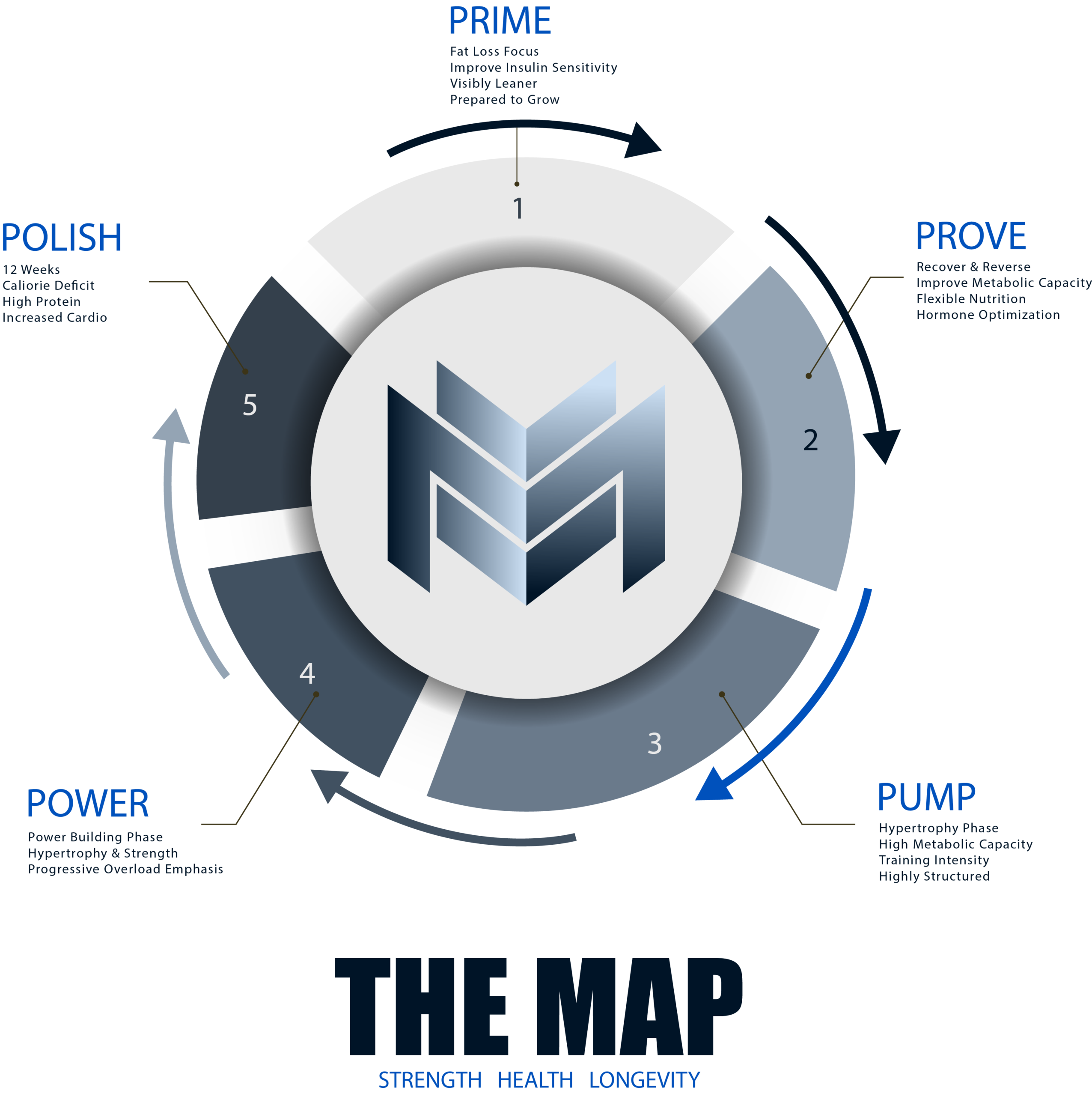
Transformation Phases
Foundation
- Establish consistent training
- Stabilize nutrition habits
- Improve movement quality
Optimization
- Improve strength
- Increase muscle mass
- Reduce body fat
Refinement
- Physique shaping
- Metabolic efficiency
- Advanced training strategies
Lifestyle Integration
- Maintain results
- Sustain healthy habits
- Avoid rebound weight gain
Target User & Expected Outcome
The Ideal Candidate
The ideal user typically:
- Is between 35 and 60 years old
- Has some fitness experience
- Wants a lean, muscular physique
- Values long-term health
- Has struggled with plateaued results
The Outcome
When implemented correctly, the Muscle Mastery Method leads to:
- Increased lean muscle mass
- Reduced body fat
- Improved strength
- Improved metabolic health
- Long-term lifestyle transformation
The ultimate objective is not temporary fitness success. The objective is lifelong physical capability and health.
YourTransformationStarts Here
Apply for coaching and start building the physique and lifestyle you’ve been working toward.